
Researchers
oric faculty

Dr. Muhammad Faisal Majeed
PhD Sociology
Director LRDC
Dr. Muhammad Faisal Majeed is a Director at Leads Research & Development Center (LRDC), Lahore Leads University (LLU). He has also been serving as an Assistant Professor of Sociology at LLU, Lahore-Pakistan since October 2023. He is an eminent Researcher as well as Sociologist, who has completed his Ph.D. in the field of Sociology from the University of the Punjab in December 2022. He is an Advisor to “Leads Sociological Society (LSS)” a flagship platform for the students studying sociology subjects in different departments of LLU. He is also working as a Program Coordinator for the BS Programmes under the Department of Sociology. Before this, he had worked for about twelve years as Deputy Program Director for the HIV/AIDS Project (A World Bank’s Project) and completed different rounds of Research and Surveillance in Punjab the largest province (about 60% population of the country) from April 2004 to July 2016. He served as a Statistical Assistant for the Economic Census under the Federal Bureau of Statistics, Islamabad from September 2001 to September 2003. He is the author of over 40 journal articles, reports, conference papers, abstracts, manuals, and chapters of books. He has been a Visiting Faculty Member for the Department of Sociology, Institute of Social & Cultural Studies, University of the Punjab, Pakistan. He has also been at the penal of Consultants for SMEDA as a Management and Research Training Consultant. His book on “Transgenderism in Pakistan” is under process for publication. He is the Executive Director of an Organization, Nawal Horizon Foundation (NHF), Pakistan working for research and development in the fields of education, health, and social development. He is also a Director for Monitoring and Research for the “Board of Directors” for an organization named Beacon Foundation for Research and Development (BFRD), Faisalabad – Pakistan, working for Key Affected Population (KAP) especially Transgenders, Men having Sex with Men (MSMs), Female Sex Workers (FSWs), Injecting Drug Users (IDUs) and Jail Inmates (JIs) for prevention of HIV/AIDS, Hepatitis and COVID campaigns. He is a certified Project Manager as well.
The academic research and development proposals are being welcomed by faculty members, research scholars and students as well through LRDC. He is also now taking Ph.D. & M.Phil. students for research supervision.
My research interests:
Research Reports, Project Proposal for Research & Dev. Projects, Sociology of Transgender, Personal and Social networking of Transgender Community, Social well-being, Transgender rights, Transgender social inclusion into mainstream society, Migration trends among the TG community, Criminology, Theories of crime & criminality etc.
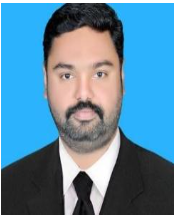
Dr. Kashif Javed is a legal academic and researcher currently serving as Associate Professor and Chairperson of the Department of Law at Lahore Leads University. He holds a PhD in International Jurisprudence and has a rich background in both academia and legal practice. With prior experience as a lecturer at Millat College Jhang and a practicing advocate in the Lahore High Court, his expertise spans criminal law, environmental law, and jurisprudence. Dr. Javed is also the Editor of the HEC-recognized Traditional Journal of Law & Social Sciences. He has authored over 20 research publications in prestigious journals, many of which are indexed in Scopus, Web of Science, and the HEC Y Category. His work focuses on AI in legal systems, environmental law, freedom of speech, and Islamic jurisprudence.
Dr. Javed has participated in international conferences and contributed to national research projects, including those related to big data sovereignty and cyberspace governance. He also holds managerial roles such as Managing Director of the Advanced Research Centre for Artificial Intelligence and Trade Law (ARCAITL), and has served as President and Vice President of the International Student’s Association at Zhengzhou University. His commitment to legal scholarship, interdisciplinary research, and academic leadership has positioned him as a rising figure in legal academia both nationally and internationally.

Dr. Hussain Ali is a distinguished sociologist with extensive expertise in gender studies, public health, and social development. His academic journey began with a focus on sociology, earning both a Master’s and an MS in the discipline, followed by a PhD in Sociology from the University of Punjab, Lahore, Pakistan in 2017. In addition to his specialization in sociology, Dr. Ali also holds an LLB, a professional law degree obtained in 2018, and a Post Graduate Diploma in International Human Rights & Law, achieved in 2011. This interdisciplinary academic background underpins his approach to addressing societal issues, blending sociological insights with legal frameworks and human rights perspectives.
Over the years, Dr. Ali has gained a wealth of research experience, making significant contributions to critical social issues such as gender-based violence, maternal health care access, social exclusion, and education. His research has shed light on the barriers women face in accessing healthcare and education, especially in marginalized communities, and has provided actionable insights for policy-making and advocacy. Dr. Ali’s work has been widely recognized within academic circles, with his research being published in numerous national and international journals. His contributions have reached global audiences, with presentations at conferences in Pakistan, the United Kingdom, and Bulgaria, further solidifying his reputation as an expert in his field.

Dr. Salman Shahid is a distinguished public health professional and medical administrator with over 36 years of extensive experience in the public, private, and international health sectors. A graduate of King Edward Medical College, Lahore, he holds multiple postgraduate qualifications including a DMRT and a gold-medal-winning Diploma in Public Health from the University of the Punjab, as well as diplomas in Human Resource and Project Management from the Pakistan Institute of Management. Throughout his career, Dr. Shahid has held several high-level leadership positions in the Government of Punjab, including Program Manager of the Punjab AIDS Control Program, Secretary of the Punjab Medical Faculty, and Additional Secretary (Technical) in the Specialized Healthcare and Medical Education Department. He also served as Executive Director of the Strategic Management & Internal Policy Unit, contributing to health policy formulation and institutional governance.
His leadership has been instrumental in initiating and scaling impactful programs such as HIV/AIDS prevention, medical education reforms, regulatory oversight of healthcare institutions, and public health surveillance. Notably, he introduced the first-ever Integrated Behavioral & Biological Survey of HIV/AIDS in Punjab and expanded healthcare services for high-risk populations. Dr. Shahid has also played key roles in various national and international donor-funded projects, collaborating with organizations such as the Global Fund, WHO, UNICEF, and USAID. In recognition of his outstanding contributions, he was awarded a Certificate of Appreciation and financial reward by the Chief Minister of Punjab. He continues to serve in public health leadership roles, currently acting as Program Manager for MDR-TB Punjab under the Association for Social Development and as Chairman of the Board of Directors for the Punjab Health Facilities Management Company. His strengths lie in strategic planning, public health policy, institutional reform, project management, and healthcare regulation.

Dr. Latif Ullah
Assistant Professor, Department of Sociology
Women Right & Empowerment Expert
Dr. Latif Ullah is a seasoned sociologist with a strong academic background and a passion for research. His research interests primarily focus on women’s participation in local governance, cultural beliefs, and the challenges and opportunities of tourism in Khyber Pakhtunkhwa.
With a PhD in Sociology from the University of the Punjab Lahore, Dr. Ullah has a solid foundation in his field. His academic journey also includes an M.Phil. in Human Rights Law and a B.A (Hons) in Sociology. This diverse educational background has equipped him with a comprehensive understanding of social issues from various perspectives.
Dr. Ullah’s teaching experience has honed his skills in conveying complex sociological concepts to students. He has taught courses on Criminology, Research Methodology, Sociology of Globalization, and Human Rights. His ability to engage students and foster critical thinking is evident in his successful teaching career.
Beyond his academic pursuits, Dr. Ullah has made significant contributions to the field of sociology through his research publications. His work has explored a wide range of topics, including women’s empowerment, cultural determinants of quality of life, and the impact of natural disasters & Climate Change issues as well.
His research has often focused on marginalized groups, such as Hijra sex workers and women in rural areas. By shedding light on their experiences and challenges, Dr. Ullah has contributed to a better understanding of social inequalities and injustices.
In addition to his research and teaching, Dr. Ullah has also been involved in various consultancy and advocacy projects. He has worked on initiatives related to gender-based violence, HIV/AIDS education, and citizen engagement in local governance. His practical experience has allowed him to apply his academic knowledge to real-world issues.
In summary, Dr. Latif Ullah is a dedicated and skilled sociologist with a strong commitment to research and social justice. His academic background, teaching experience, and research publications demonstrate his expertise in the field. He is a valuable asset to the academic community and continues to make significant contributions to our understanding of social issues.
Zahid Hussein is a highly accomplished development communication and social mobilization expert with over four decades of national and international experience. He is the President of the Sustainable Resource Foundation (SuRF), a prominent social development consultancy based in Lahore, Pakistan. His professional expertise spans strategic communication for health, education, population welfare, advocacy, risk communication, and community engagement (RCCE). Zahid has served in leadership roles with globally recognized institutions such as USAID, UNICEF, UNFPA, and DFID, and has contributed extensively across Asia, Africa, and the Middle East. His portfolio includes managing complex projects in communication for development (C4D), designing national advocacy strategies, and leading evaluations and research in areas like HIV/AIDS, maternal health, child protection, and climate change communication. He has held voluntary leadership roles with international organizations, including the AIDS Society of Asia and the Pacific (ASAP) and the Framework Convention on Global Health Alliance. Educated in Pakistan and abroad, Zahid holds multiple postgraduate degrees, including MAs in English, Political Science, and Journalism, along with professional certifications from Stanford and the University of Geneva. A respected thought leader in the social sector, Zahid is known for his strategic insight, cross-sectoral collaborations, and lifelong commitment to equitable, evidence-based development communication.
Dr. Moghira Badar is an accomplished academic and researcher from Sheikhupura, Pakistan, with over 20 years of professional experience in the fields of environmental sciences, management, and quality control. He holds a PhD in Management Sciences with a specialization in Green Business Strategy from the National College of Business Administration and Economics (NCBA&E), Lahore, as well as an MPhil in Biochemistry and an MSc in Environmental Studies. His academic background is complemented by various professional certifications, including ISO 14000 Environmental Management and quality control training. Throughout his career, Dr. Badar has held key academic positions, such as Assistant Professor and Head of Department at the University of Sargodha, and served as Professor and Director at Salar International University. He has also been affiliated with institutions like FC College, UET Faisalabad, and Allama Iqbal Open University as visiting faculty or tutor.
Dr. Badar’s research interests span human resource management, environmental and biochemical research, quality and statistical analysis, and green business strategies. He has participated in international conferences in Cyprus and the UK and has supervised several MPhil and PhD theses on topics including biogas production, ISO 14001 implementation, and toxicology. He has contributed extensively to academic literature, with 18 research publications in indexed journals covering issues such as water quality, industrial waste management, and sustainable practices. Moreover, he has led multiple industrial research projects in collaboration with companies such as Pakistan Tanners Association, Taj Foods, and Crescent Bahuman Ltd., focusing on wastewater treatment, toxin control, and product quality enhancement. As a reviewer and editor for several reputable journals, Dr. Badar continues to make significant contributions to both academia and industry.

Dr. Haseeb Ahmad is currently serving as an Assistant Professor at the Department of Mathematics, Lahore Leads University. He earned his PhD in Mathematics from COMSATS University in 2022, specializing in Chemical Graph Theory and Fuzzy Graph Theory.
With a strong research background, Dr. Ahmad has published over 13 research papers in prestigious international journals, including Artificial Intelligence Review, Journal of Mathematics, AIMS Mathematics, Mathematical Methods in the Applied Sciences, and Utilitas Mathematica. His work demonstrates expertise in both theoretical and applied aspects of mathematical sciences. In addition to his research contributions, Dr. Ahmad is skilled in various computational and analytical tools, including MATLAB, Python, Mathematica, LaTeX, and ChemDraw. He actively engages in peer review as a reviewer for several renowned journals, such as Artificial Intelligence Review, Scientific Reports, and Journal of Molecular and Engineering Materials.
His dedication to advancing mathematical research and his involvement in academic services highlight his commitment to the field of mathematical sciences.
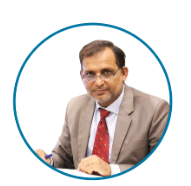
Dr. Syed Shahid Hussain is an accomplished academician and administrator with over 20 years of experience in teaching, research, and academic management. He holds a PhD in Business Administration (2025) and master’s degrees in management and human resource management. He has served in several senior roles, including Director Academics and Additional Registrar at Lahore Leads University and the University Of South Asia, as well as Registrar and Deputy Registrar at various institutions. Dr. Hussain has taught a wide range of business and management subjects at top Pakistani universities and is a published researcher with articles in reputable journals focusing on knowledge management, organizational performance, and strategic leadership. His professional contributions also include project work with UNDP and the development of performance management systems. In his administrative roles, he has led academic planning, policy development, student support, compliance, and data systems management. Dr. Hussain is recognized for his leadership, communication, and project management abilities and has participated in international academic trips and conferences.
Lahore-Pakistan since October 2023. He is an eminent Researcher as well as Sociologist, who has completed his Ph.D. in the field of Sociology from the University of the Punjab in December 2022. He is an Advisor to “Leads Sociological Society (LSS)” a flagship platform for the students studying sociology subjects in different departments of LLU. He is also working as a Program Coordinator for the BS Programmes under the Department of Sociology. Before this, he had worked for about twelve years as Deputy Program Director for the HIV/AIDS Project (A World Bank’s Project) and completed different rounds of Research and Surveillance in Punjab the largest province (about 60% population of the country) from April 2004 to July 2016. He served as a Statistical Assistant for the Economic Census under the Federal Bureau of Statistics, Islamabad from September 2001 to September 2003. He is the author of over 40 journal articles, reports, conference papers, abstracts, manuals, and chapters of books. He has been a Visiting Faculty Member for the Department of Sociology, Institute of Social & Cultural Studies, University of the Punjab, Pakistan. He has also been at the penal of Consultants for SMEDA as a Management and Research Training Consultant. His book on “Transgenderism in Pakistan” is under process for publication. He is the Executive Director of an Organization, Nawal Horizon Foundation (NHF), Pakistan working for research and development in the fields of education, health, and social development. He is also a Director for Monitoring and Research for the “Board of Directors” for an organization named Beacon Foundation for Research and Development (BFRD), Faisalabad – Pakistan, working for Key Affected Population (KAP) especially Transgenders, Men having Sex with Men (MSMs), Female Sex Workers (FSWs), Injecting Drug Users (IDUs) and Jail Inmates (JIs) for prevention of HIV/AIDS, Hepatitis and COVID campaigns. He is a certified Project Manager as well.
The academic research and development proposals are being welcomed by faculty members, research scholars and students as well through LRDC. He is also now taking Ph.D. & M.Phil. students for research supervision.
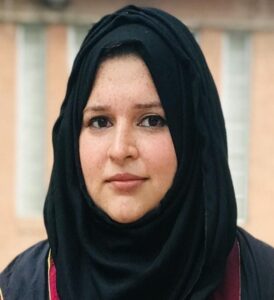
Sabeen is a dynamic and dedicated academic professional with an MPhil in Political Science from Kinnaird College for Women University, Lahore. With a strong foundation in teaching, research, and policy analysis, she has accumulated diverse experience across prestigious institutions such as Lahore Leads University, Revan CSS Academy, Sage Law College, and Superior College Gujrat. Currently serving as a Lecturer and Assistant Director at Leads Research and Development Center, she has demonstrated expertise in designing curriculum, delivering lectures for undergraduate and CSS aspirants, supervising MPhil theses, and managing academic conferences including ICOSS 2024 and ICOSS 2025.
Her scholarly contributions include peer-reviewed publications and impactful research presentations on international relations, women’s rights, climate change, and Pakistan’s socio-economic challenges. She has also written for the Nearpeer CSS Magazine, covering critical geopolitical and domestic issues. Beyond academia, Sabeen has actively led community-based research and development initiatives, such as vocational programs for rural women and NGO impact assessments.
Known for her strategic thinking, strong communication skills, and passion for public engagement, she is proficient in content development, thesis mentoring, and event coordination. Her involvement in Model United Nations (MUN), policy forums, and student mentorship reflects her commitment to youth empowerment and intellectual growth. Sabeen’s innovative mindset, combined with her hands-on experience in education, policy, and outreach, positions her as a valuable contributor to both academic and development sectors.

Mahtab Jamil Akhtar is a dedicated academic professional with a strong background in Political Science, holding an M.Phil. And Bachelor’s (Hons.) from prestigious institutions including Kinnaird College and GC University, Lahore. She has experience as a permanent lecturer at Lahore Leads University and BLS Legal Education, as well as visiting faculty roles at several law colleges. Mahtab has actively participated in multiple international conferences, earning recognition and awards for her presentations. She has held leadership positions in various academic societies and received certificates for excellence in performance and management. Her objective is to contribute effectively to the field of education through her knowledge and experience.